




Excellent experience start to finish – always very responsive to any queries and the turnaround on the property I was buying was very quick, even in the busy time leading up to stamp duty deadline. Jenny was always very helpful and went above and beyond to close on a short timescale.
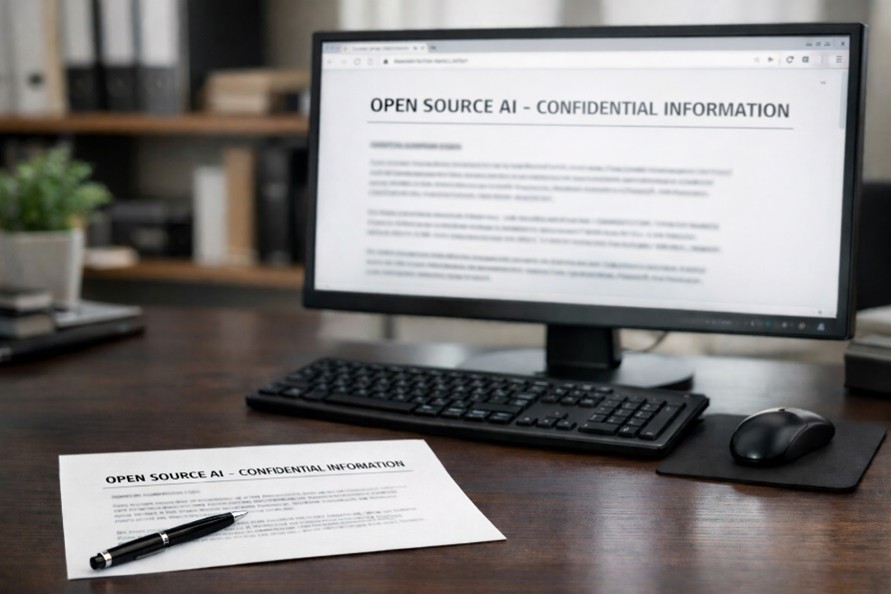
If your in-house legal team, directors, or retained experts are uploading documents to Open-Source artificial intelligence tools, you may have already lost legal privilege on those documents and could be compelled to disclose them to your opponent. This is not a theoretical concern. It is now the position of the Upper Tribunal.
The Legal Position: What the Upper Tribunal Has Said
In Munir v Secretary of State for the Home Department [2026] UKUT IAC 81 the Upper Tribunal addressed the use of Open-Source AI tools directly and in unambiguous terms. The Tribunal stated:
“Uploading confidential documents into an open-source AI tool, such as ChatGPT, is to place this information on the internet in the public domain, and thus to breach client confidentiality and waive legal privilege, and any such conduct might itself warrant referral to the SRA and should, in any event, be referred to the Information Commissioner’s Office.”
The consequences of this ruling are stark. Once legal privilege is waived, it is lost. It cannot be recovered. There is no mechanism by which a party can retrospectively assert privilege over material that has entered the public domain.
Who is at risk and why?
The scope of this issue extends well beyond solicitors and barristers. Any individual or organisation that handles privileged or confidential material and has been using open-source AI tools in the course of that work must urgently consider their position. This includes:
- In-house legal teams who have uploaded instructions, advices, internal investigations, or board papers into Open-Source AI drafting tools;
- Directors and senior decision makers who have used Open-Source AI to draft, refine, or summarise sensitive communications or strategic documents;
- Expert surveyors, engineers, accountants, tax advisers, and others who have used Open-Source AI assistance in preparing their reports or working documents;
- Solicitors and counsel who have processed client materials through Open-Source AI tools.
In each case, if confidential or privileged material has been uploaded into an Open-Source AI environment, that material may now be considered to have entered the public domain. The Tribunal’s reasoning is clear: the act of uploading is itself the waiver.
The critical distinction: Open-Source versus Closed Enterprise tools
The Tribunal drew an important and deliberate distinction between Open-Source AI tools and closed enterprise environments. Tools such as ChatGPT, standard Google AI products, and similar consumer facing platforms are Open-Source in the relevant sense: they process data in a manner that places that data, or risks placing it, in the public domain.
By contrast, closed enterprise tools within a properly configured and secured organisational environment may be used safely. However, this is only the case where the data processing terms have been carefully reviewed, understood, and verified. The fact that a tool is paid for, branded, or widely used within your organisation does not, of itself, make it closed. You must check the terms of use.
Many subscription-based AI services expressly reserve the right to use inputted data for training purposes or make it accessible beyond the immediate user. If such terms apply, the tool cannot safely be used with privileged material, regardless of the subscription cost or the provider’s reputation.
Regulatory and Professional Consequences
The Tribunal’s remarks concerning the Solicitors Regulation Authority and the Information Commissioner’s Office should not be read as peripheral observations. They are a clear indication that the use of Open-Source AI with privileged material may give rise not only to adverse consequences in litigation, but also to disciplinary and regulatory proceedings.
For regulated professionals, solicitors, surveyors, accountants, tax advisers, and others, the obligation to maintain confidentiality is a fundamental professional duty. Breach of that duty through careless use of AI technology is unlikely to attract sympathy from a regulator.
Steps you should take Now
In light of this ruling, we strongly advise the following immediate steps:
- Audit what your teams have uploaded: Identify whether any privileged or confidential material has been submitted to any AI tool, and assess the nature of that tool’s data processing arrangements.
- Review your data processing agreements: Before any privileged material is used in conjunction with any AI tool, ensure that the relevant data processing agreement has been examined by someone with appropriate expertise and authority.
- Implement a clear AI policy: Establish a written policy that distinguishes between tools that may safely be used with sensitive material and those that may not. Ensure this is communicated to all relevant staff, including directors, experts, and support personnel.
- Do not assume a tool is safe because it is paid for: Subscription status is not determinative. Only a proper review of the data processing terms will confirm whether a tool meets the required standard.
- Seek legal advice where privilege may already have been compromised: If there is any possibility that privileged material has already been uploaded to an Open-Source tool, you should take legal advice promptly. Early action may be relevant to managing the consequences, even if it cannot undo the waiver itself.
The integration of artificial intelligence into professional practice is inevitable and, in many respects, beneficial. However, its use must be carefully managed. The Upper Tribunal has now made clear that careless use can have consequences that are immediate, serious, and irreversible.
If you have questions about your organisation’s use of AI tools, or if you are concerned that privilege may have been compromised, please do not hesitate to contact us.
—
Case Reference: Munir v Secretary of State for the Home Department [2026] UKUT IAC 81
Full judgment: https://caselaw.nationalarchives.gov.uk/ukut/iac/2026/81
This article is provided for general information purposes only. It does not constitute legal advice and should not be relied upon as such. You should seek specific legal advice tailored to your circumstances.
